
Governance and Operations of Thermal Energy Networks
Purpose. To help cities and states decide who owns a thermal energy network (TEN), how it sells service and how it is paid for.
Key takeaways
The three decisions
A TEN is a shared loop of water-filled pipe that links wells or another heat source to heat pumps in many buildings. It crosses property lines and runs under public streets, so it looks like a utility even when it is small. Each choice limits the other two:
- The federal credit goes to the owner of the ground loop and at least one connected heat pump [2]. Tax-exempt bonds can cut it by up to 15% [3, 4].
- The New York Public Service Commission (PSC) treats an owner that serves multiple customers across property lines as generally a utility [5].
- A Revenue Ruling 63-20 nonprofit corporation hands title to the government when its bonds are paid off [6]. A 501(c)(3) owner with qualified 501(c)(3) bonds can keep the network [7].
Gaiergy view: Test all three decisions together, early, against the state law that applies.
Wheel: Gaiergy graphic, full report Figure 1.
Who can own a network

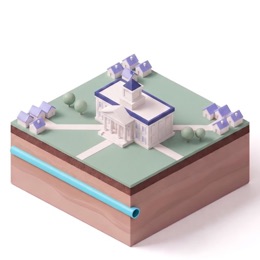


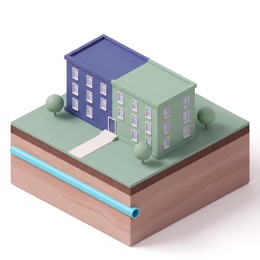
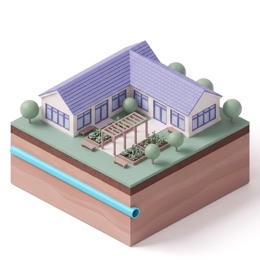
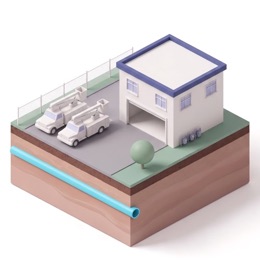
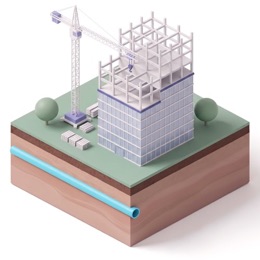
Split title can block financing. In Troy, New York, the local development corporation that was to own the well field had no taxing powers or other revenue. The plan was dropped in August 2025; one owner now holds the whole network [13]. Utility pilots stall on cost. The Maryland PSC did not approve pilots in December 2025 [22] (PSC order not confirmed); National Grid canceled its Lowell pilot in December 2024 [23].
State law is the gate
Heat network laws, September 2026 [26]
City powers under Dillon's Rule, 2003 survey [25]
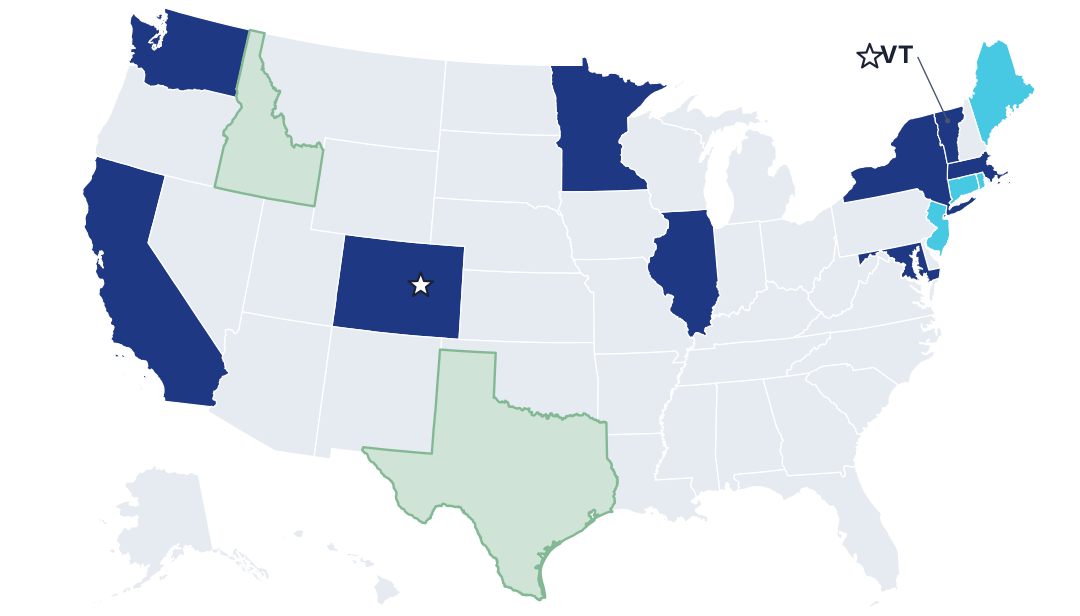
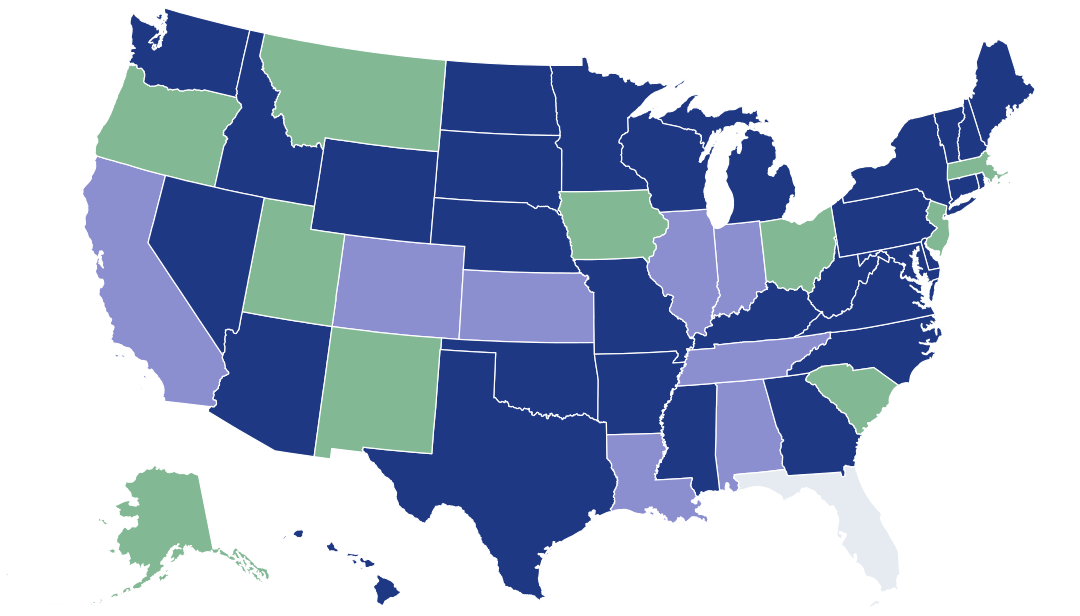
Under Dillon's Rule, a city has only the powers the state gives it in express terms [25]. By Gaiergy's count 13 states have a TEN law; the tracker lists 14, with Texas [26]; Rhode Island's enactment is not confirmed [44]. Gaiergy view: Look for an express state grant before planning to own a network.
How service is sold
Working definitions: a power or thermal purchase agreement (PPA, TPA) sells metered heat; energy as a service (EaaS) sells an outcome for a flat fee; an energy service agreement (ESA) pays on measured savings. A different federal contract, the Energy Savings Performance Contract (ESPC) energy sales agreement, can run up to 25 years under 42 United States Code 8287(a)(1) [57]. Gaiergy view: The key risk test is who pays when heat use changes.
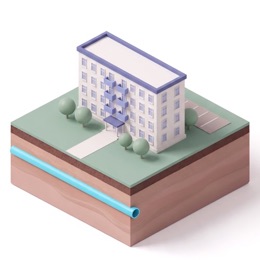
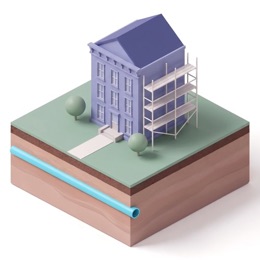
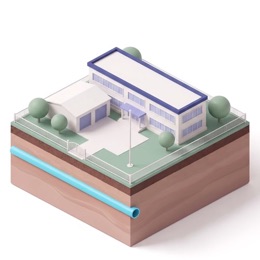
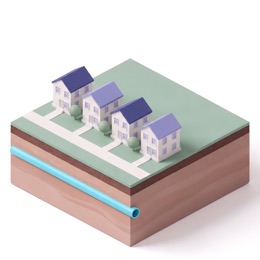
How it is paid for, and paid back over 40 to 60 years
Who repays. A revenue bond is repaid from network charges, with no pledge of taxing power, and may default if that revenue falls short [61]. Gaiergy view: Bond buyers want proof that customers will connect and pay.
Tax-exempt P3. Gaiergy view: A public-private partnership (P3) can combine these pieces. The 501(c)(3) nonprofit project company owns the network and keeps its nonprofit status. Partners do not have to be nonprofits: a private partner can be a contractor within the 501(c)(3) structure or a partner in it. Qualified 501(c)(3) bonds sit outside the state volume cap [78].
Federal credit. 30% with prevailing wage and apprenticeship rules, or under 1 megawatt (MW), if construction begins before 2033; then 26% in 2033, 22% in 2034 and none after [4]. Governments and tax-exempt bodies can take it as direct pay [79]. No federal credit is written for TENs [4, 92]. Of 5 community geothermal pilots the Department of Energy selected [11], its page now lists 3 [12].
Illustrative: From 30 to 60 years the yearly payment falls 23.6%; total interest rises from $7.3 million to $16.5 million.
DC Water, the District of Columbia water and sewer utility, sold a 100-year bond [67].
Match the model to the site
A checklist for a city or state
Gaiergy view: 8 of the report's 15 yes or no gates; a "no" shows where work is needed
- Does a state statute name your owner type?
- Has the regulator said how it will treat the structure?

- A large anchor customer ready to sign?
- One party owns the loop and at least one heat pump?

- Is the credit cut of up to 15% in the model? [3, 4]
- Each financing entity named by what it is in law?
- Who pays if heat use goes up or down?
- A qualified operator for the life of the bonds?