
New York Battery Incentives, Explained
Ten ways a New York battery can earn money. Which ones you get depends on size, place and program.
Hover over any acronym to see what it means. On a phone, tap it.
- LSRV
- Locational System Relief Value
- DRV
- Demand Reduction Value
- ICAP
- Installed Capacity
- LBMP
- Location-Based Marginal Pricing
Size picks the road
Up to 5 MW AC, a battery sells to the utility under VDER. Over 5 MW, it sells wholesale to NYISO. The same megawatts cannot take both roads.
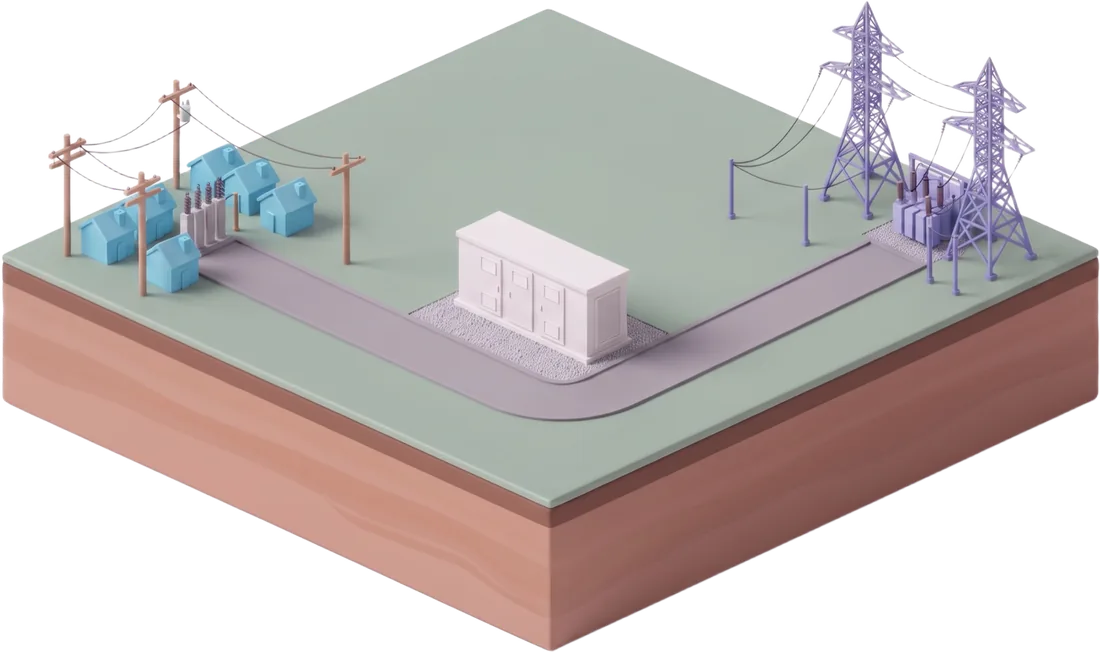
VDER is capped at 5 MW AC; over 5 MW sells wholesale. Sources: utility VDER statements, NYSERDA program page, RPTL 487.
Watch one summer day pay
A 5 MW / 20 MWh battery charges at night and sends power out in the afternoon. Each value lights up only when it pays.
12 am
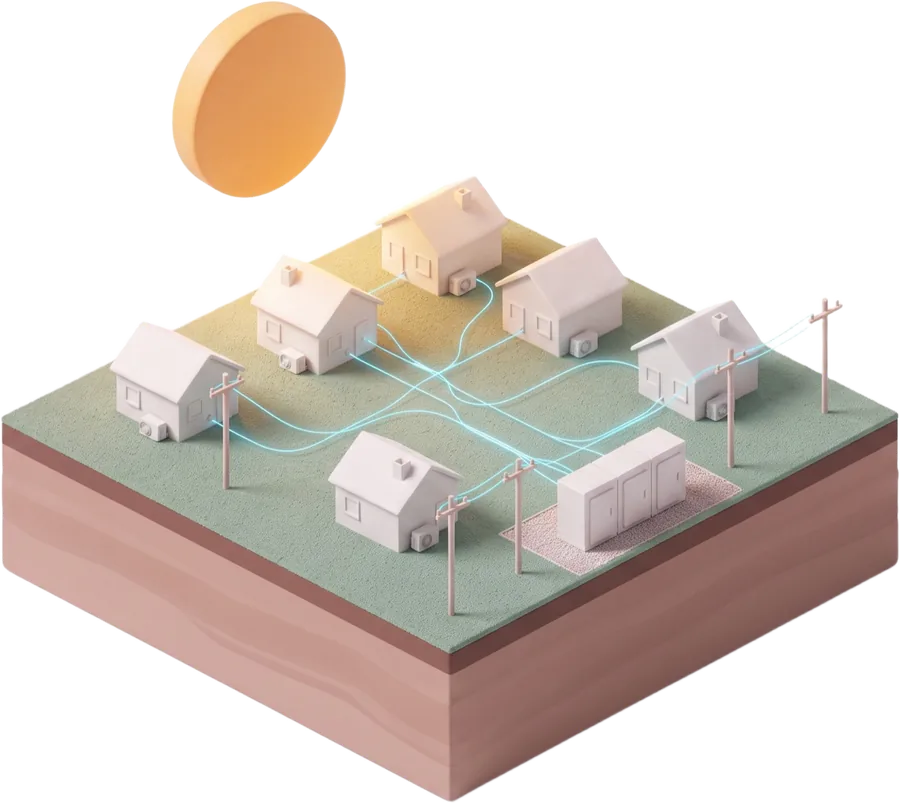
DRV: Demand Reduction Value
Paid per kWh the battery sends out in the summer peak window. No other hour pays DRV.
Sources: National Grid, NYSEG, RG&E, Con Edison, O&R, Central Hudson VDER statements and PSEG Long Island (LIPA Value Stack Statement No. 103) in effect October 15, 2026; PSC Order April 18, 2019, p.21. A DPS Staff proposal of December 11, 2025 would raise DRV and LSRV; the PSC has not ruled as of October 15, 2026.
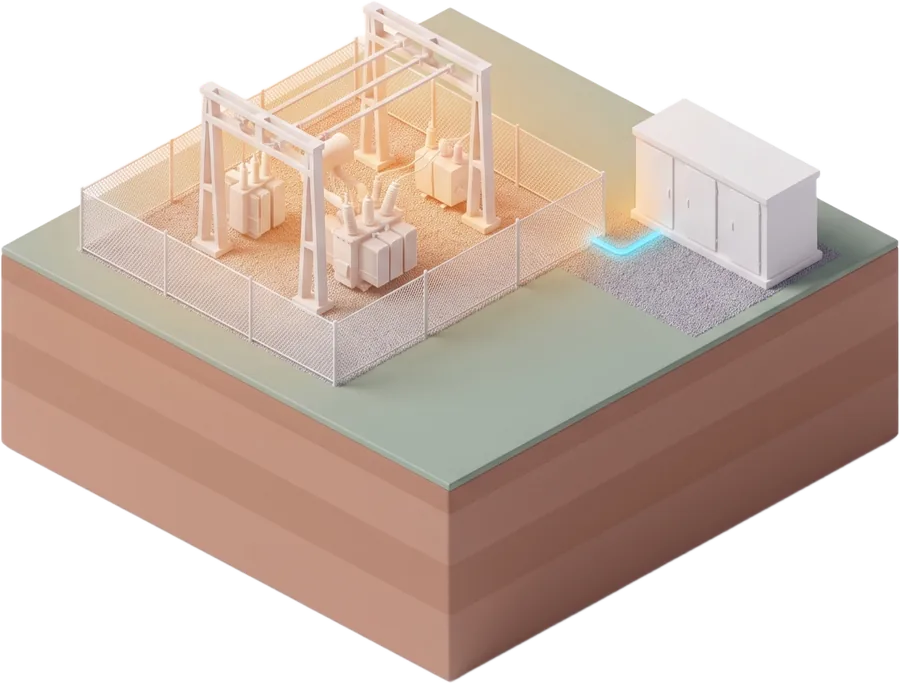
LSRV: Locational System Relief Value
LSRV is extra pay for a battery at busy substations that each utility names. Each utility lists those substations, and how many MW of batteries it will still pay for at each one, in its monthly VDER statement.
Where LSRV pays today
Each utility caps the MW of batteries it will pay LSRV at each named substation. When a project locks in its rate, its MW come off the list. At zero, LSRV closes there.
A project locks its rate on its eligibility date, when it pays 25% of its interconnection cost, and keeps it for 10 years: PSC Order April 18, 2019, pp.17-18, 21.
Source: each utility's VDER Value Stack statement, published monthly (National Grid, NYSEG, RG&E, Con Edison, O&R, Central Hudson; LIPA: LSRV Statement No. 7, effective May 1, 2026). Last checked by Gaiergy: October 15, 2026. MW left changes every month. Check the latest statement before you plan.
At least 10 calls a year, 21 hours notice, 1 to 4 hours each, paid on the lowest hour of export, locked 10 years, no penalty for a miss: PSC Order April 18, 2019, pp.17-18. Rates and MW left: utility VDER statements in effect October 15, 2026 (National Grid, NYSEG, RG&E, Con Edison, O&R, Central Hudson, PSEG Long Island).
Every LSRV area with MW left
Tap a dot for the area, MW left, rate and source. Open a utility below for the full list.
Locations: National Grid, NYSEG and RG&E points matched by name to utility substation location files (Gaiergy NY substation dataset, September 2026). Hollow rings sit at the named town or neighborhood because no exact point was found. Basemap: Esri.
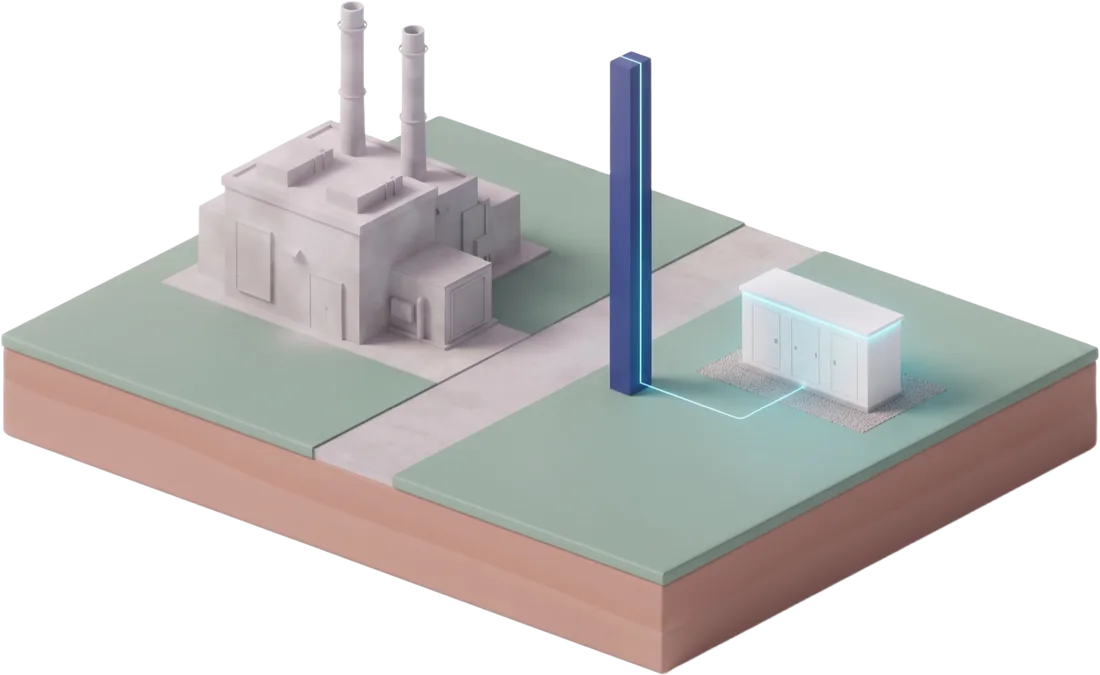
ICAP (Alt 3): one hour sets a year of pay
ICAP means Installed Capacity. New York pays power sources to stand ready for the year's highest demand. Under VDER, the utility passes this value to your battery through Alternative 3.
It was New York's highest-demand hour of 2025: 31,857 MW, hour beginning 6 pm. What your battery sent out in that one hour sets its ICAP pay for every month of 2026.
Peak: NYISO June 2025 Operations Report (NYSRC); NYSEG lists it as "NYISO Top Ten Peak Hours", Hour 1: 06/24/25, 7:00 PM (hour ending): NYSEG VDER statement No. 110. Rule: "export during the New York Control Area peak of the previous calendar year": NYSEG Rule 40.B.6.c.
The kW resets each year at the new peak hour. The $/kW rate changes every month. Only DRV is locked for 10 years.
National Grid Rule 40, Leaf 220.3.1: pay = "the project's net kW injection during the ICAP Market Peak Hour in the previous year" times "the effective Alternative 3 Value Stack Capacity rate"; stand-alone storage "may only select Alternative 3" and gets Value Stack pay "for a term of 25 years from their interconnection date": National Grid PSC 220, Rule 40. DRV lock: PSC Order April 18, 2019, p.21.
NYSEG ICAP (Alt 3) rate, $ per kW-month, October 2025 to September 2026: low $2.08 (April 2026), high $8.43 (June 2026). NYSEG VDER statements No. 98 to 109.
The peak has come between late June and late July. Run full power every hot weekday afternoon, June to August. Gaiergy view.
NYISO 2022 Peak Dates and Times; NYISO 2023 Peak Dates and Times; NYISO 2025 Final ICAP Forecast (2024 peak); NYISO June 2025 Operations Report.
Assumes the peak falls between June 20 and July 31, as the last four peaks did (Gaiergy assumption). First pay month follows NYSEG's "previous calendar year" wording. National Grid's tariff says "previous year", not "previous calendar year"; when its 12 months start is not confirmed.
Clean energy pays. Grid energy does not.
The E value (environmental value) pays for clean energy sent to the grid. A battery earns it only on energy that came from its own renewable source.
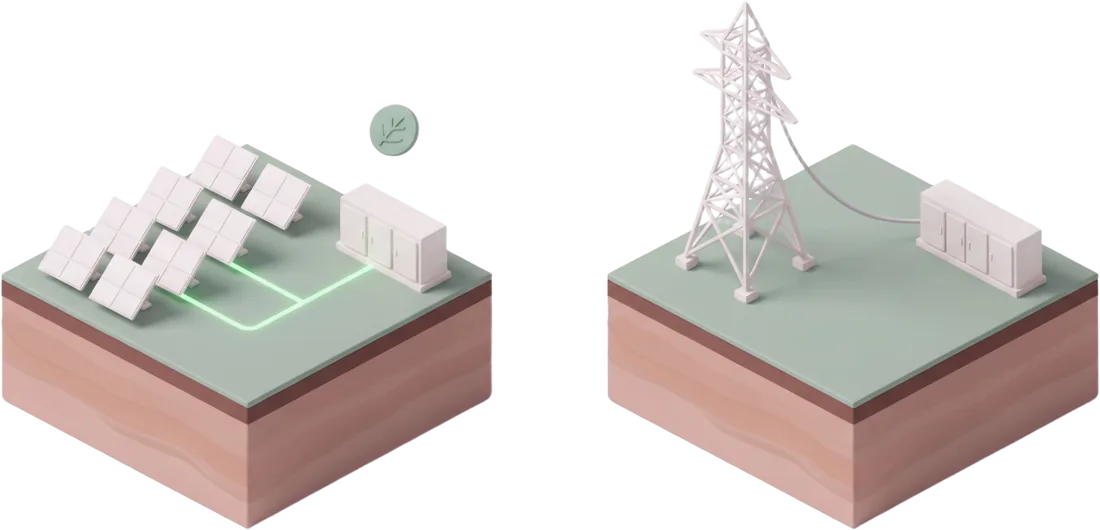
E value $0.03103 per kWh: utility VDER statements in effect October 15, 2026 (same rate at all six VDER utilities; LIPA pays no E value to stand-alone storage, LIPA tariff Leaf 34V). Standalone exclusion: National Grid Rule 40.
2017 VDER Order, Case 15-E-0751 (secondary sources)
Build your battery's year
Pick a utility, a size and a place. The bar shows yearly revenue by stream, before costs.
How we count
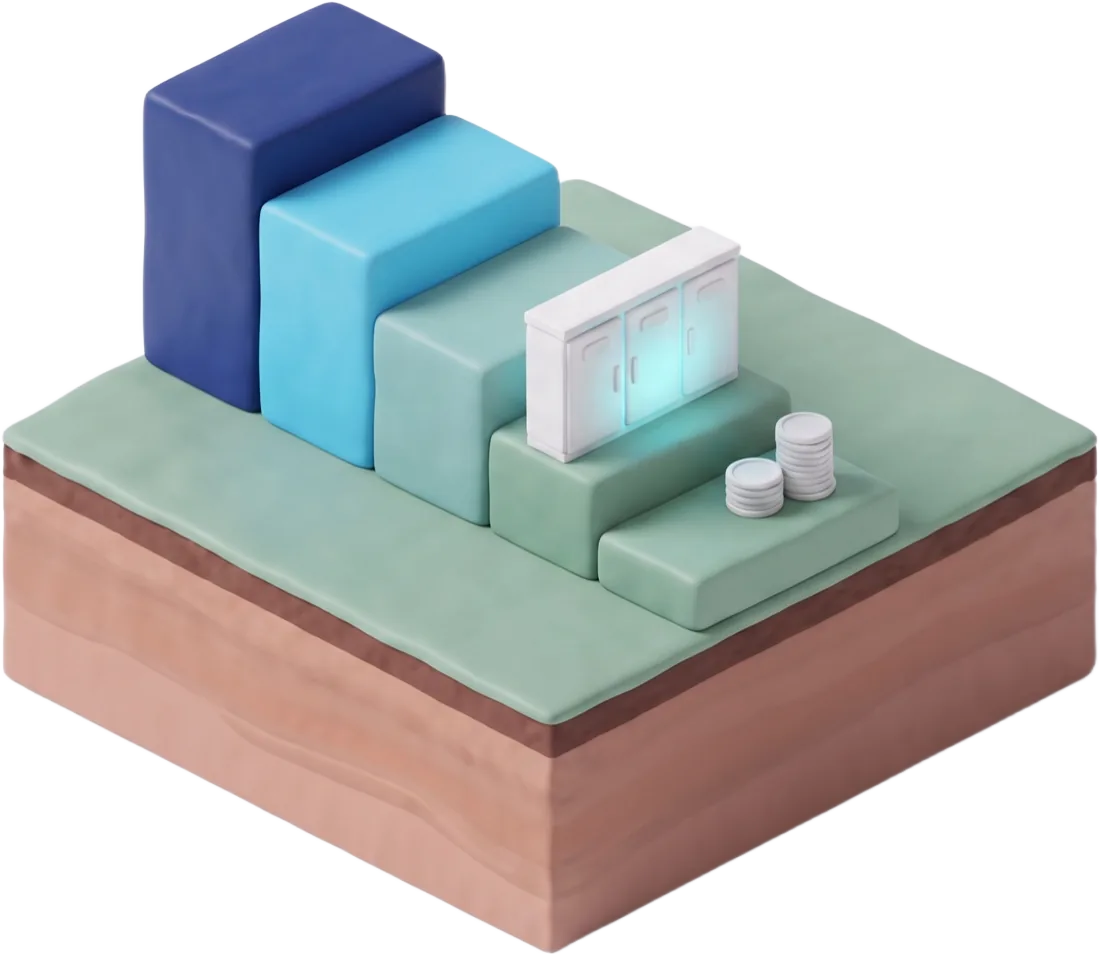
A one-time incentive per kWh
NYSERDA pays once, after the battery passes inspection. Your rate is the open block in your region.
Redrawn from NYSERDA's block dashboard, data as of October 6, 2026: NYSERDA Retail Storage block dashboard. Bar width = block MWh (block dollars / rate). Money left on closed blocks is leftover, not open funding. The NYC and Westchester split follows the block counts in the manual, pp.36-37 and 57.
How it pays
Which kWh get paid
Hours 1 to 4 at the full rate. Hours 5 and 6 at 25%. Nothing past 6 hours. Paid on at most 20 MWh.
Incentive: Estimate
Rules: Program Manual, April 2026, p.43. Rates: open blocks on the dashboard, October 6, 2026.
$350 per kWh
One statewide block: $15.75 million (45 MWh). For behind-the-meter batteries at critical facilities in Disadvantaged Communities, or affordable housing. Not on Long Island. Opened April 13, 2026. Cannot combine with the market-rate incentive.
NYSERDA webinar December 4, 2025, slide 14; manual pp.38-40, p.16.
What stacks on one battery?
Pick a size, a charging source and a utility. Your battery fills with every payment it can earn. The red list shows what it cannot.
Rules: utility VDER statements; NYSERDA manual pp.35, 37; National Grid PSC 220, Leaf 220.6; National Grid answer to Gaiergy, September 2026; Con Edison Rider T Guidelines 2026, section 6.7, p.21; National Grid Rule 40. Pairs with no clear rule show "Check the program rules".
Three products, sold direct
Over 5 MW AC, a battery sells energy, capacity and grid services straight into NYISO's wholesale markets.
LBMP
Real-time price every 5 minutes. Day-ahead price every hour.
ICAP
Capacity auctions, Rest of State, $ per kW-month:
Capacity accreditation 2026/27: 4-hour battery 84.56% (CHPE in), 2-hour 64.65%.
ICAP auction results (NYISO); NYISO ICAPWG, February 17, 2026.
Ancillary services
Regulation. 10-minute spinning reserve. 10-minute non-spinning reserve. 30-minute reserve.
Index Storage Credit
A NYSERDA contract that steadies wholesale revenue. How the credit works per secondary sources, not confirmed.
Round 1: 8 awards
950 MW / 4,360 MWh
Issued July 28, 2025 (ISCRFP25-1). Awards announced September 23, 2026. Monthly contract against a zonal reference price, up to 15 years for lithium-ion. Source is secondary; not confirmed on nyserda.ny.gov. Round 2 planned by the end of 2026, not confirmed. Not with NYSERDA Retail (manual p.37).
Modo Energy articleNYSERDA solicitations page
Modo Energy, September 23, 2026 (secondary); NYSERDA solicitations page.
Both roads keep these
The federal Investment Tax Credit and the New York property tax exemption work on either road.
No FEOC compliance, no tax credit.
From 2026, a storage project must source at least 55% of its cost from non-FEOC suppliers (FEOC = Foreign Entity of Concern), or the federal ITC is lost.
Sidley, The One Big Beautiful Bill Act, July 2025; also pv magazine. Not confirmed against the statute.
Build the credit
of eligible project cost
Low-income bonus is by competitive allocation; for a standalone battery it is not confirmed. 26 U.S. Code 48E.
FEOC: a different percent
Not part of the credit. It is a minimum share of the battery's cost that must come from non-FEOC sources. Miss it and the credit is zero.
Storage: at least 55% non-FEOC cost share in 2026. Not confirmed against the statute.
How long storage keeps it
Start of construction year sets the share of the credit.
NY property tax: RPTL 487
A 15-year exemption on the added value of a qualifying energy storage system. It applies unless the town, county or school district opted out by local law. The taxing body may require a PILOT within 60 days of the owner's notice.
Extra pay from the utility
Every New York utility pays batteries to cut load on hot days. Most ask you to give up DRV and LSRV in return. Read the rule before you enroll.
Which route fits my project?
Three questions. The path lights up to your stack.
Where every number comes from
Compiled October 15, 2026.